
IP surveillance cameras
A short introduction to the different Camtech Supervision camera types. For more information, as always, please get in touch.
Every Camtech camera has PoE (Power over Ethernet), which means only one Ethernet cable has to be run to the camera. Power is carried in the same cable. That does not apply to the Wi-Fi models, which need their own power supply.
All of our cameras also have adjustable zoom and focus. The narrower the sector being watched, the farther away you can zoom in sharply, and the other way around. PTZ cameras can be aimed remotely from anywhere in the world. They can also be set to sweep and zoom along a preset pattern, so one camera covers a large area.
Some models have autofocus and/or AI. They can zoom in on faces and number plates, recognise up to 100 faces, and avoid recording or alarming unnecessarily when “known” people move through the area.
Every camera has a microphone option.
Almost all of the cameras are metal (aluminium alloy), meet protection class IP67, and work just as well in summer heat as on the coldest winter nights. PTZ cameras should not be moved unnecessarily in severe cold.
Camtech IP surveillance cameras are available in these form factors: bullet, dome, PTZ, box, fisheye and special cameras.
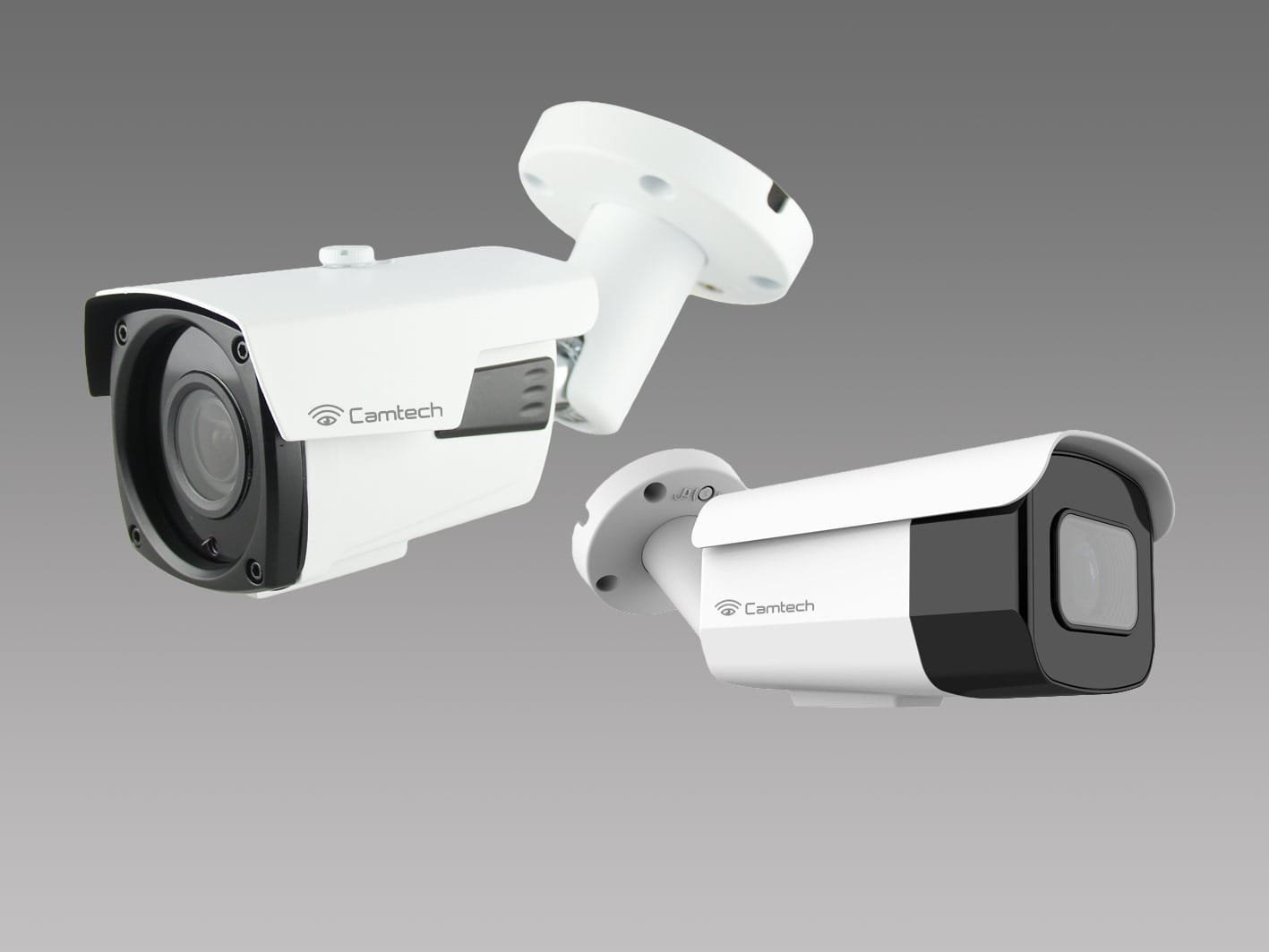
Camtech bullet cam
The bullet form factor is mounted on a wall or, for example, under an eave. Visible means preventive.
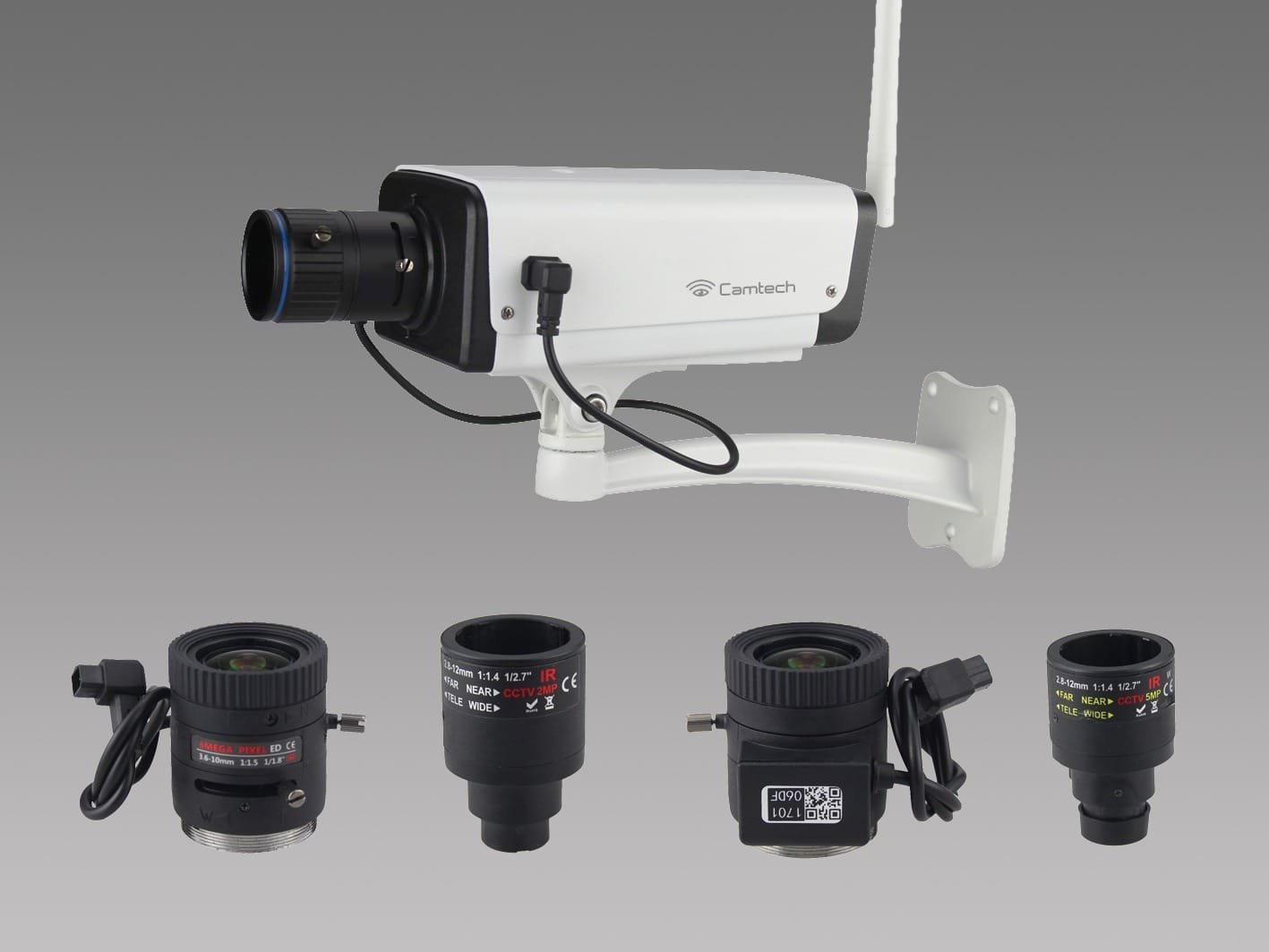
Camtech box cam
The box form factor is made only for indoor use in dry, warm rooms.
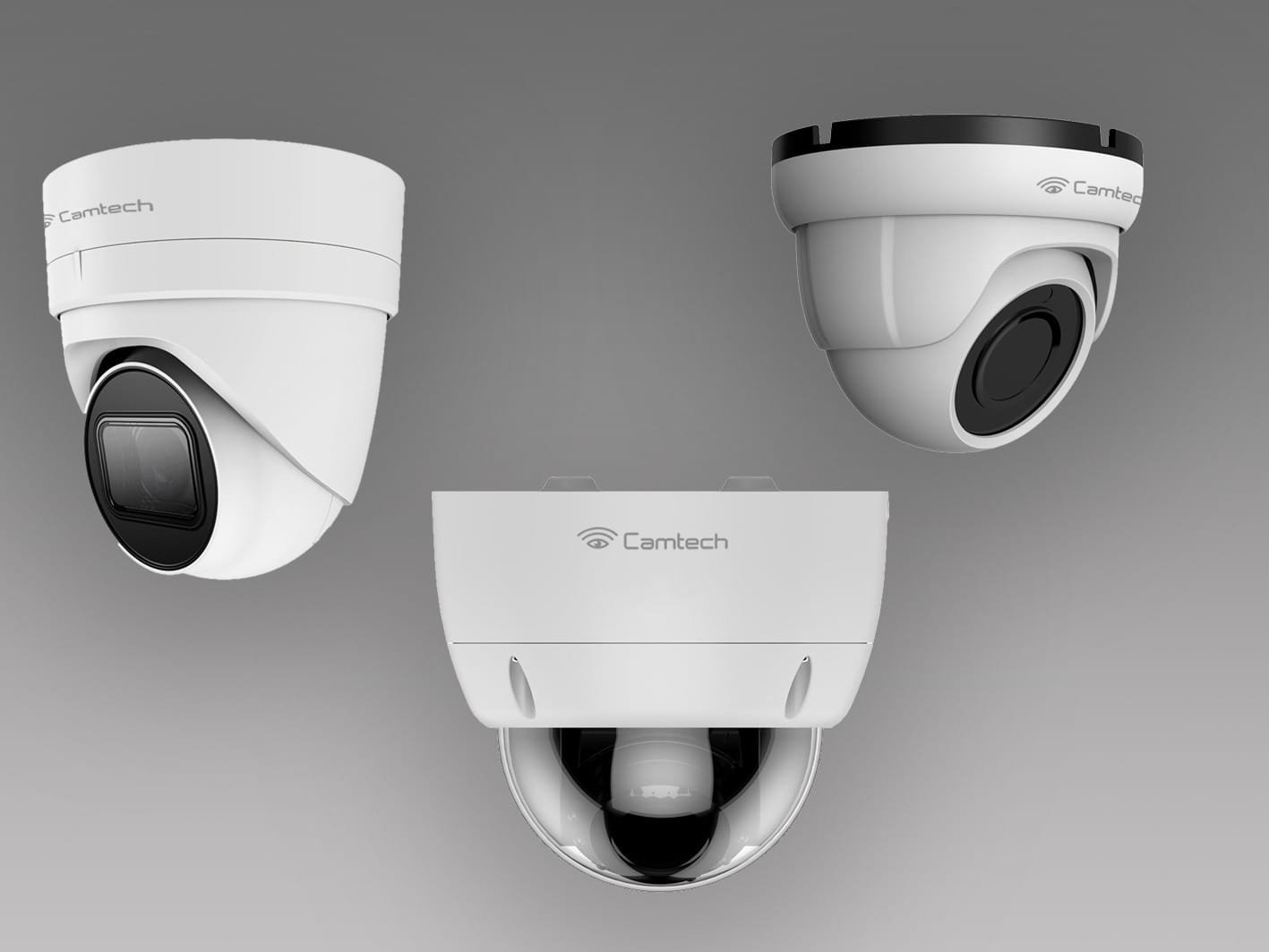
Camtech dome cam
The dome form factor is mounted in a ceiling or under an eave. Resistant to vandalism.
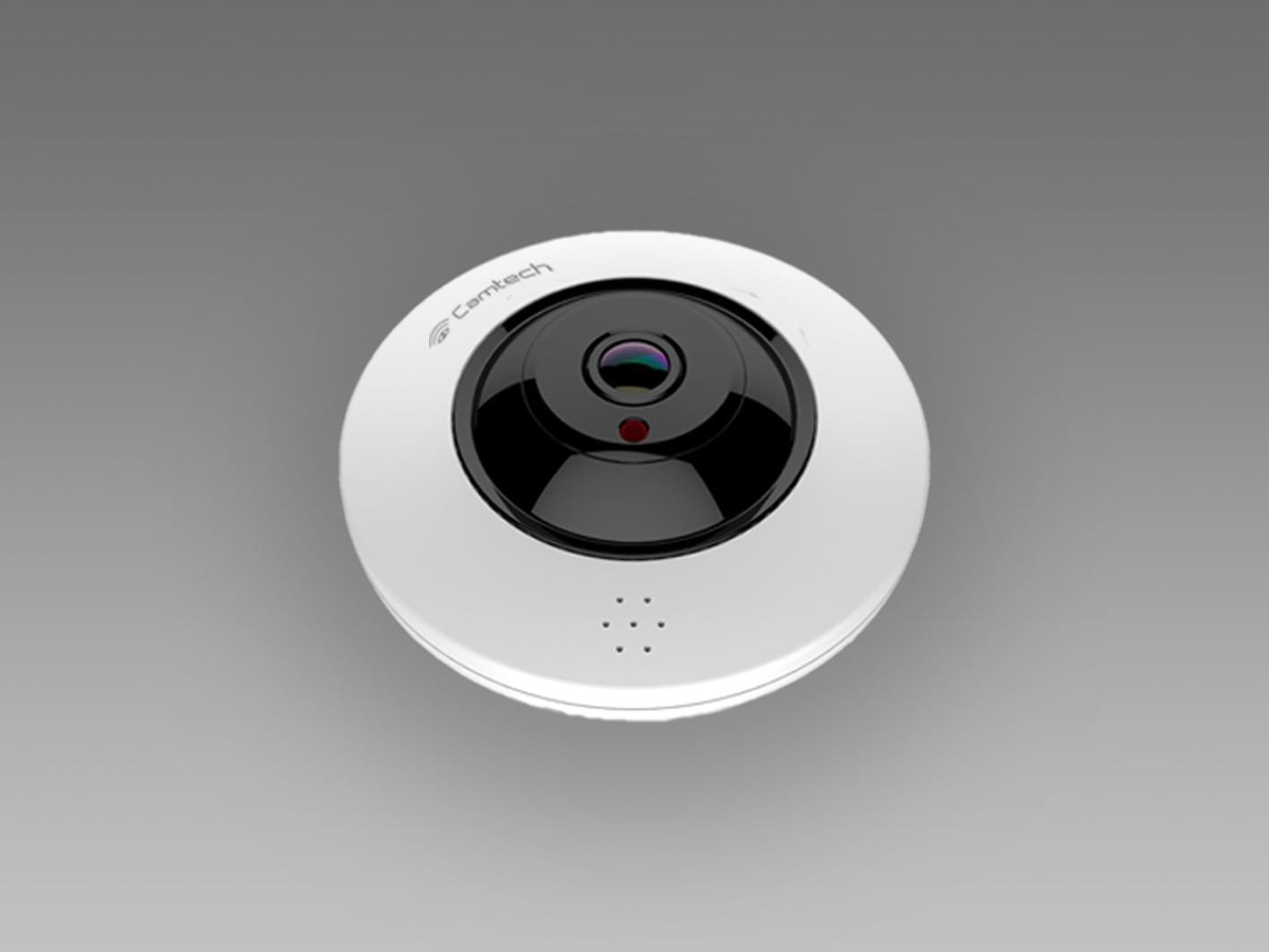
Camtech fisheye
The fisheye is placed in the middle of the ceiling. With special software you can then pan around the whole room, including on a phone.
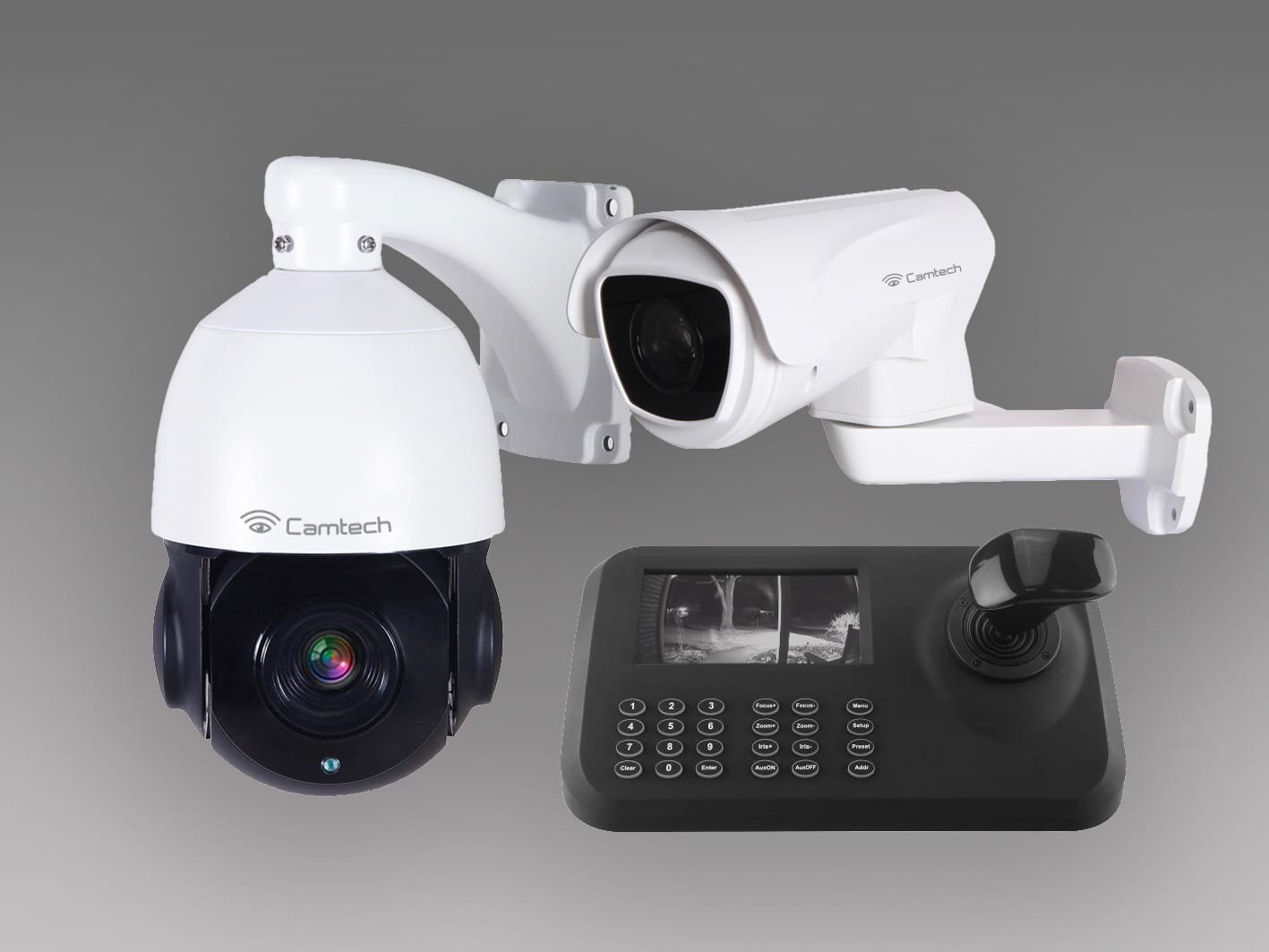
Camtech PTZ
PTZ stands for pan, tilt and zoom.
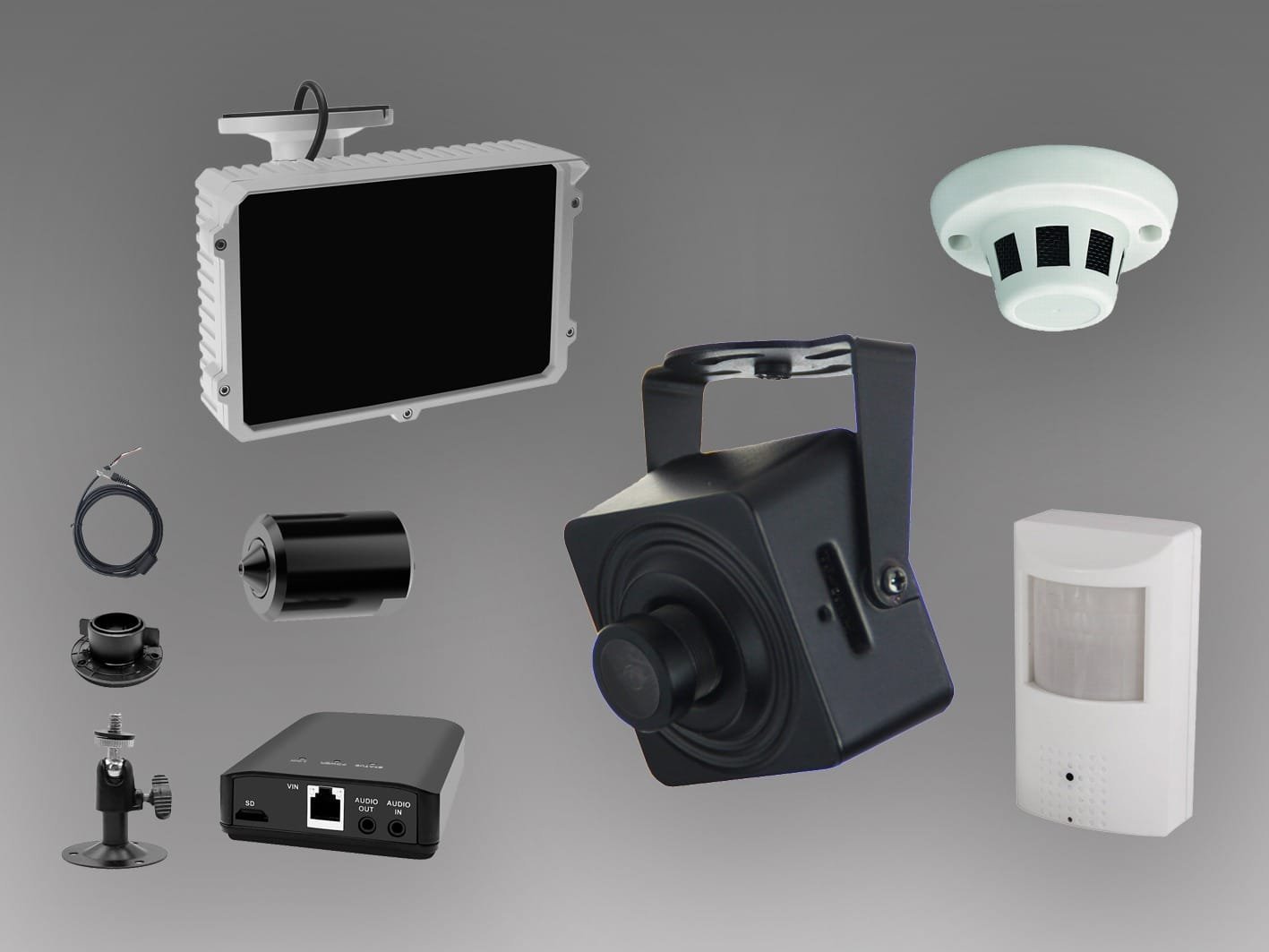
Camtech special cameras
Special cameras include mini cameras, hidden cameras, IR cameras and more.
A Camtech IP camera is essentially its own Linux computer, with a built-in web server, mail server, FTP, DDNS, RTSP and a graphical operating system used with a mouse. They are programmed and run with the included software, and also directly in common web browsers. Usually they are run through the NVR operating system, including in the browser. Once they have been configured during installation, they normally do not need to be touched for years.
Sometimes it is worth updating the software. I will let you know if that is the case.
Recording in total darkness?
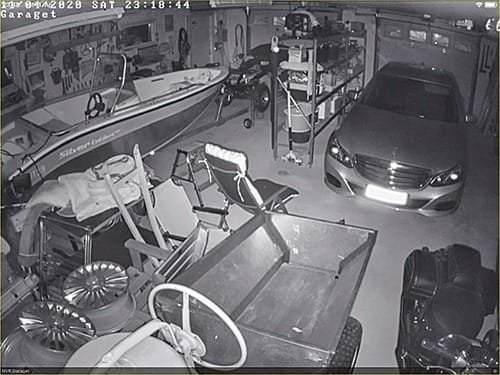
Camtech cameras can always see and record what happens, even in total darkness. Depending on the camera (the number of IR LEDs and the type of CMOS), the infrared coverage is about 40–70 metres.
When recording in total darkness the image is black and white. An intruder cannot see the infrared light and does not know they are being filmed. The camera can be set to blink a red LED as a warning that recording is in progress.
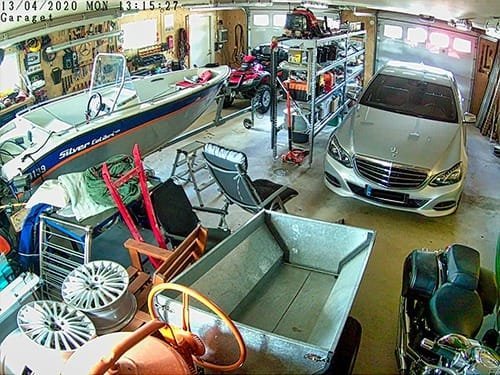
The picture on the right was recorded in complete darkness, next to a daytime picture.
A quote and installation start by calculating the right set of cameras, of the right type, for the site. Resolution runs from 2 Mb (1080p) up to 12 Mb. The number of IR LEDs, which decides how much of the site can be watched in total darkness, also varies. Mounting height and network capacity affect the choice as well.
Special software calculates a layout for your particular need, so the result is good.
(Example images from a quote are shown below.)
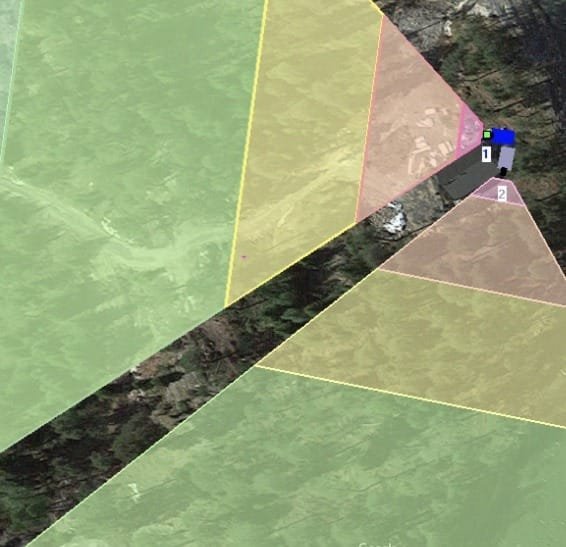
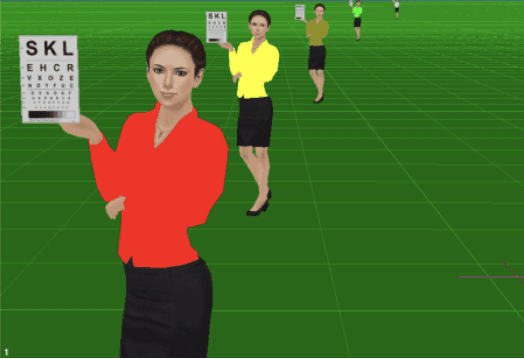
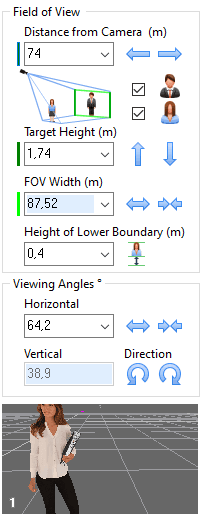
Field key
- Light blue: monitoring. 12.5 pixels per metre. Following traffic or people moving freely, where individual numbers or faces do not need to be identified.
- Light green: detection. 25 pixels per metre. Detecting that a person is present, without necessarily identifying the face. Familiar people are usually recognised.
- Green: observation. 62 pixels per metre. Familiar people are recognised by face, body shape and movement. An unfamiliar face can be zoomed for recognition.
- Yellow: recognition. 125 pixels per metre. People are easily recognised.
- Light red: identification. 250 pixels per metre. Face images of a quality that can be used in court to prove someone’s identity beyond reasonable doubt.